

How local news has changed over the centuries in Bath
In March, the Bee hosted a talk at the Curious Minds Festival charting local journalism from the 1740s to today.

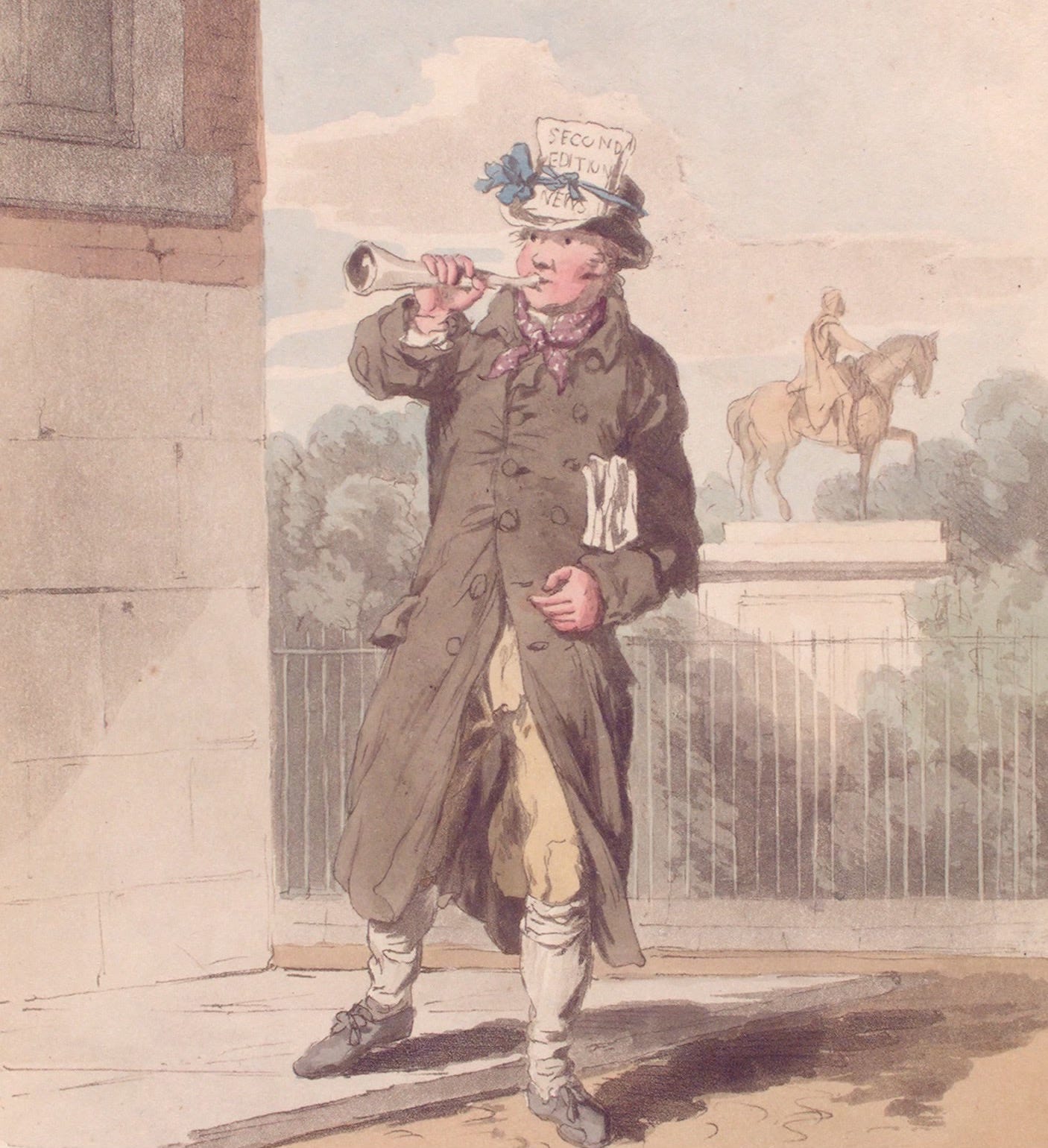
Bath has a long history of local newspapers. In 1744, The Bath Journal, printed in Kingsmead Street, first appeared on street corners, in shops and cafes.
A slim weekly of four pages, it shared ‘correspondence’ from Constantinople, Moscow, Rome, Marseilles, Berlin, and as far afield as the Cape of Good Hope and Charles-Town (South Carolina). There was local news too. And while wealthy, literate patrons bought or borrowed a copy to read in lending libraries… in pubs, the paper was often read aloud.
You can read a fuller story about that first broadsheet here.
The Newsman, or Hawker, pictured above, walked for miles across Somerset, Wiltshire and Gloucestershire, selling newspapers. He also peddled books, ‘medicines’ like “Dr Hooper’s Female Pills,” carried parcels and solicited new advertising and subscriptions.
The only Newsman we know of by name today, according to Bath Spa University historian Dr Kevin Grieves, is a man called Stephen Gay, who said he’d totted up the equivalent of three trips around Earth over decades on his paper route.
From the 1740s onwards, many local newspapers appeared, amalgamated and disappeared, with the Bath Chronicle finally emerging as the long-standing local daily.
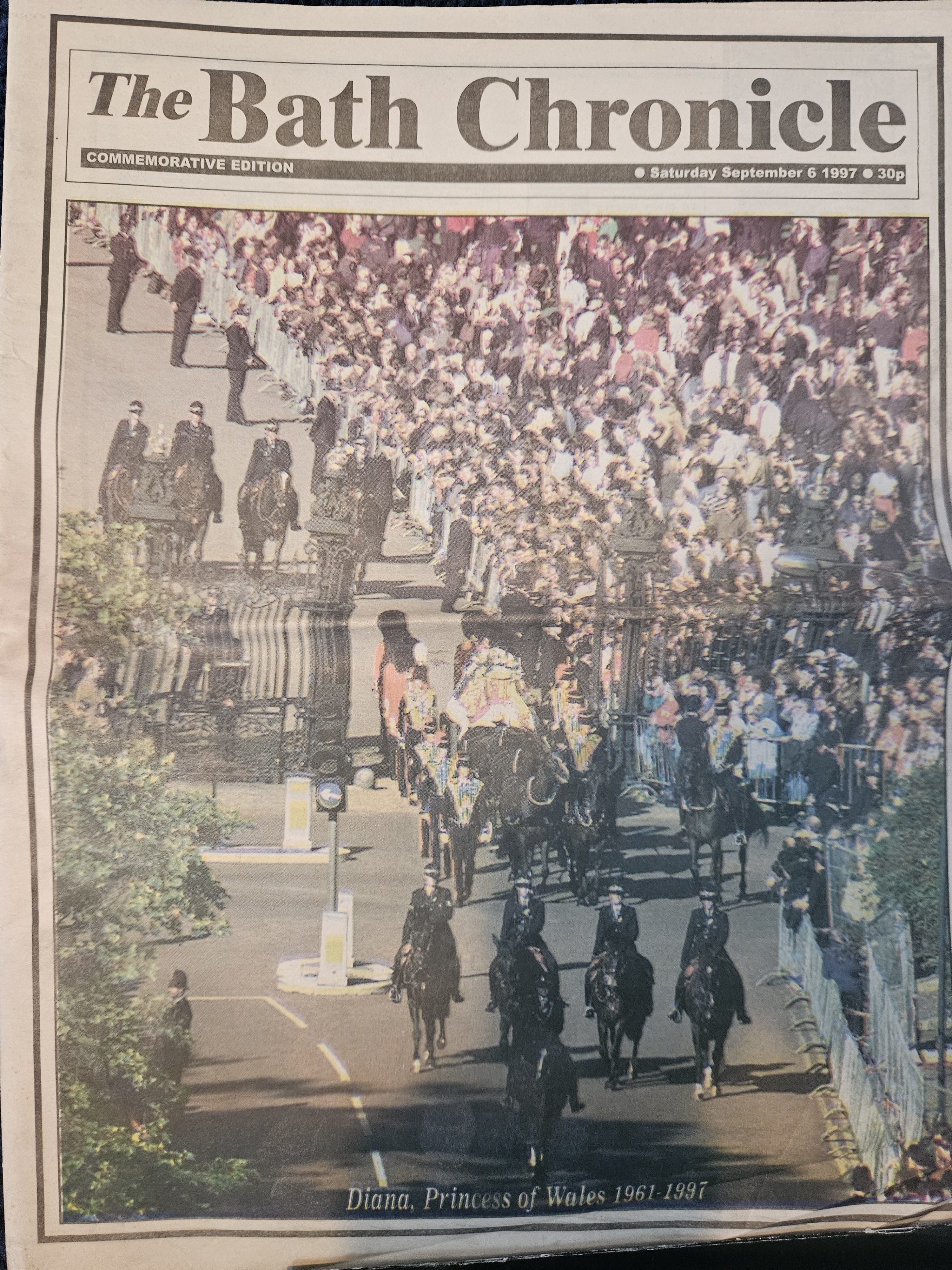
Lynne Fernquest took over as the first female editor of the Bath Chronicle in 2012, just as the printed paper began its transition to an online product.
She told the Curious Minds audience that it didn’t take long for the concept of ‘clicks’ to transform the news agenda. Screens appeared in the newsroom with a ‘scoreboard’ of the most clicked stories.
Suddenly, advertisers wanted their ads placed next to the most clicked pieces… and the newsroom faced pressure to serve up more click-worthy content - a trend that has intensified and hollowed out public service journalism today.
Fernquest said that readers would simultaneously write to her complaining about the changing focus of local news coverage, while her digital data told her the same readers weren’t clicking on the very news they claimed to miss!
(Many weeks, the most clicked stories here at the Bee are the most salacious crime stories. It’s led me to question what a ‘click’ actually signifies: idle curiosity? reptilian brain impulse? genuine interest? The jury is out. 🤷🏽♀️)
Still, Fernquest and her team dedicated their resources to meaningful coverage of impactful local stories like the 2015 controversy over the University of Bath vice chancellor’s £450,000 salary; Bath baby Harmonie Rose, who survived meningitis but had four amputations; and the anger over Bath’s Bus Gate, where scores of motorists were fined despite unclear signage.
In 2016, the Bath Chronicle was sold to Trinity Mirror group, now Reach Plc.
Many journalists like Lynne took their public service editorial skills to other arenas and local journalism in the UK has steadily declined since.
The Charitable Journalism Project said in its 2022 report that there are fewer local newspapers in Britain now than at any time since the 18th century, and it’s getting worse. Just three companies - Newsquest, Reach and National World - own most titles.
With the BBCs public services also cut and a new charter being negotiated, it’s unclear what will happen to funding for local public service journalism. There are some encouraging signs: the announcement in March by the government that it will commit £12 million in funding for local news outlets - lower than expected - is still welcome.
Today, Bath is considered a news ‘oasis’ as opposed to a news ‘desert,’ given that we have many local sources. As the Bee’s editor, I curate these sources every week, and here’s how I rate them:
The Bath Echo consistently comes out on top as a local, independent news outlet doing the hard graft of covering our courts, council decisions, traffic developments and most day-to-day news. This is a tough job, and the Echo seems to be funding it with local advertising and other work.
The BBC funds Local Democracy Reporters, like John Wimperis, who covers council meetings and other civic issues. The BBC also has the resources to report more interesting features and regional stories and remains a consistently trustworthy source.
ITV West also commits good resources to covering our community - but the nature of its output means unless you catch stories going out live on TV, you are unlikely to see them again.
Somerset Confidential is a great source of investigative, in-depth journalism and is run by long-time local journalists with vast regional experience.
BathLive/SomersetLive/Bath Chronicle are all the same Reach-run outfit engaged largely in ‘churnalism’ - or the recycling of official and other press releases. Known for reversioning dubious regional stories to satisfy search engine clickbait, this brand’s website is an assault on the senses. It’s largely an extreme click-bait model.
I often have to be cautious about linking to it. Often, a story may be actually accurate, but misleading, or lacking vital context. Sometimes, it’s a recycled generic celebrity story with no link to this city. Other times, stories seems to come from marketing firms and contain embedded links to commercial websites or reports.
A brilliant example of this ‘clickbait’ style of journalism was the cleverly reported story about a local Reform candidate who wore a Nazi uniform. (Sharp-eyed subscribers will remember I linked to this story a few weeks ago, but not before much soul searching.) It turns out the candidate is also an actor… The piece gamely saved this critical detail to much later. By then, the clickbait had worked. (I ultimately linked to it because, despite its clickbaity cleverness, it did profile a local Reform figure.)
In Bath, we have other local titles operating under a range of journalistic and revenue models, including Nearfield - an events magazine (it commits £2,000 to original journalism per issue according to co-founder Simon Tapscott), Bath Newseum (a local journalist’s blog), Bath Voice (run by a local freelance journalist), The Bath & Wiltshire Parent, The Bath Magazine and Bath Life magazine - these last three use marketing services and ads to fund original features and advertorials.
My priority at the Bee is to collate the most original, meaningful and accurately reported journalism available - all linked back to the source - with extra context where needed. My aim is simply to amplify good reporting and increase our understanding of what’s happening locally. I see myself doing what an old-school editor did in the days of newspapers: curating information so readers don’t have to.
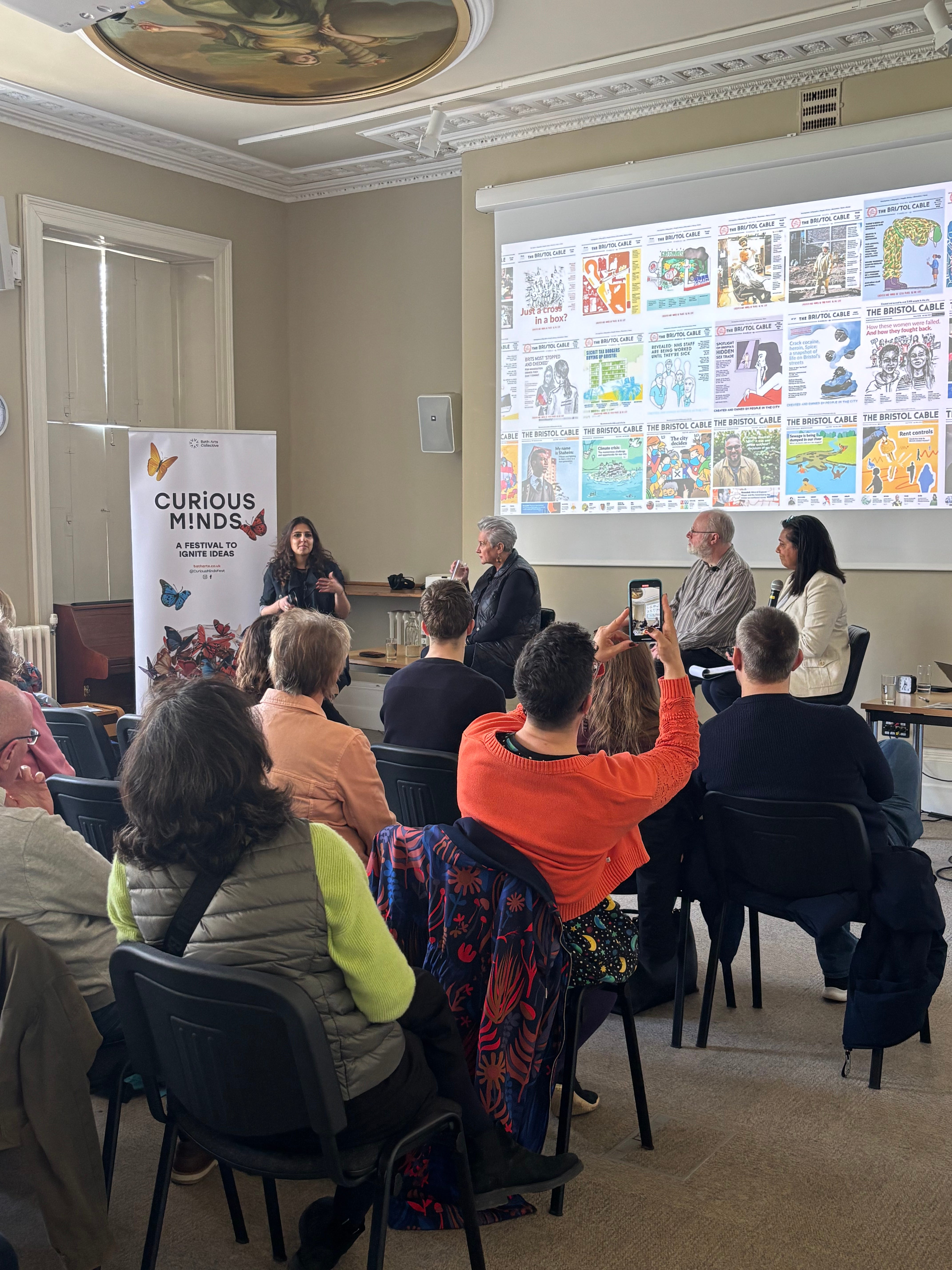
So here’s the problem: while ALL journalists in the UK work under strict laws and regulation (broadcasters are especially strongly regulated)… and are paid worse than ever… Influencers can mostly ignore these rules while profiting handsomely.
Dylan Page, or Newsdaddy on TikTok, now has more subscribers than the BBC and New York Times combined, despite not being an actual reporter. So what is a real journalist to do?
Enter the Bristol Cable.

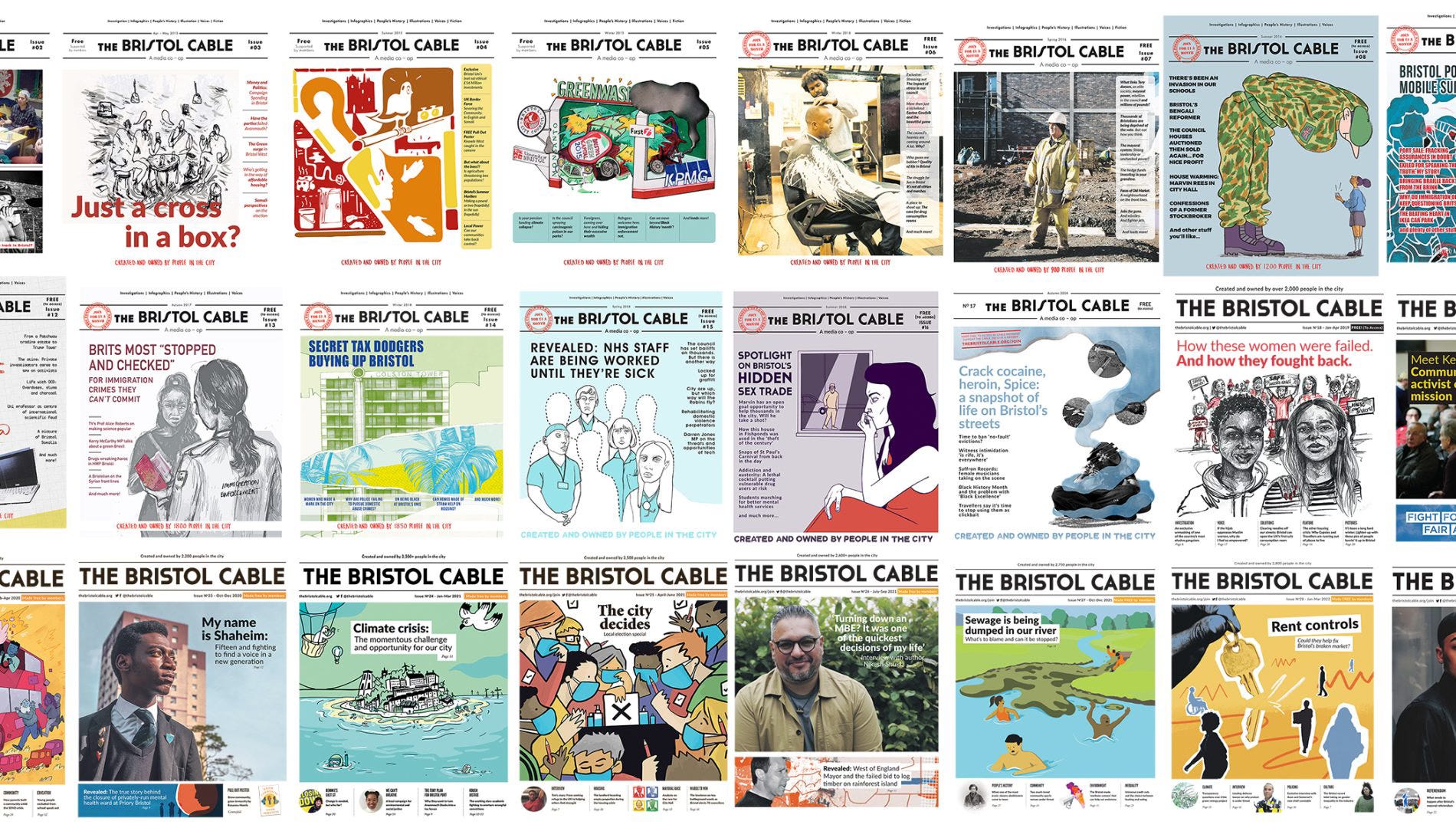
The Cable started in 2014 with about £3,000 crowdfunded from locals and a vague mission to start a cooperative. Today, the Cable is one of only 29 journalism cooperatives globally. It’s owned by its members, funded mostly by their subscriptions, as well as some grant funding and a small amount of ethical advertising.
Its stories are often long investigations. One led to a local businessman being charged under modern slavery laws.
Editor Priyanka Raval told the Bath audience that the Cable probably shouldn’t exist. But it does simply because people support its mission: to get on with the job of uncovering important stories.
The Cable has won awards, and in a world first, it recently launched its own ethical app - one that connects readers without harvesting their data or using algorithms to govern interaction.
So, perhaps, there is hope for local journalism. Perhaps the spirit of the 1744 Bath Journal endures in this global/local city.
If, as journalists, we can meaningfully connect with local audiences and work collaboratively to set a meaningful agenda, then deeply reported, quality local news might still have a sustainable future. Let’s hope.
 | A guest post by
|
Thanks for highlighting that it's not a simple case of rallying to the plight of local news outlets - like all stories worth reading, there's more nuance to it than that!